





Tselinny Center of Contemporary Culture,
design: Asif Khan Studio
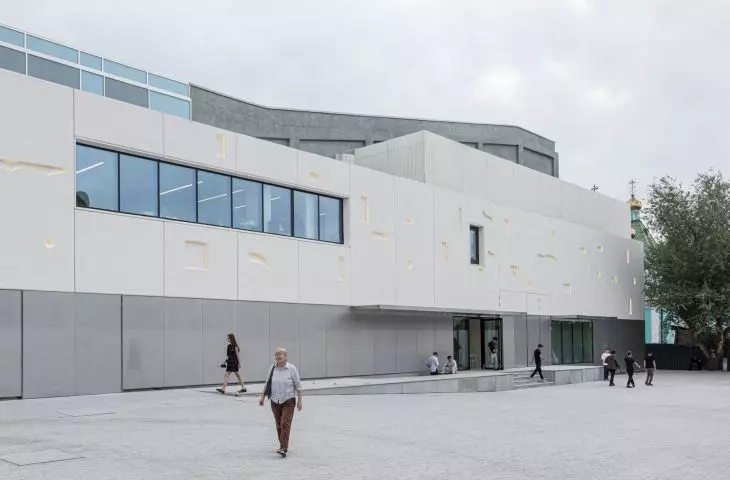
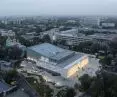
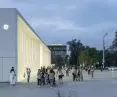
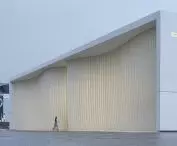
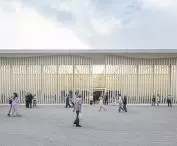
The Tselinny Center of Contemporary Culture in Almaty was established in a former movie theater dating from 1964, one of the city’s most recognizable examples of Soviet modernism. Asif Khan Studio transformed it into Kazakhstan’s first independent center for contemporary culture —a place where the building’s restoration intertwines with the city’s memory and a new artistic program. It is a project that does not obscure the building’s difficult history but allows it to be interpreted from a different perspective.
Tselinny Center, Almaty — © Laurian Ghinitoiu, Asif Khan Studio
A cinema with a troubled past
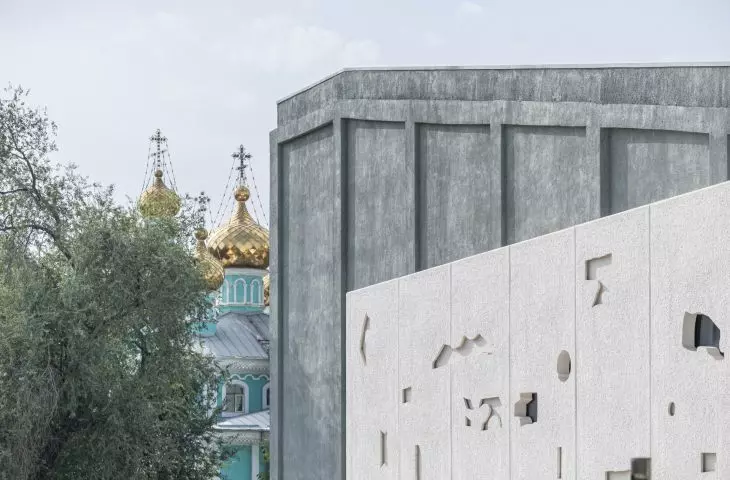
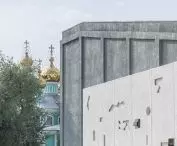
The former Tselinny Cinema was built to commemorate the tenth anniversary of the Soviet “Tselina” campaign, which was linked to the development of so-called virgin lands. The very name of the building thus carried political significance: it spoke of the conquest of the steppe and the subjugation of the landscape to ideology. The building was also positioned to block the view of the nearby St. Nicholas Cathedral. Within the cityscape, Soviet modernity obscured Almaty’s earlier history. Over the following decades, the monumental structure lost its original function. The cinema was rebuilt many times, with its space divided and adapted for commercial purposes. It has housed clubs, bars, a restaurant, a photography studio, and a furniture showroom. The building, which was intended to be a symbol of prestige, became a site of chaotic transformations.
Tselinny Center, Almaty — © Laurian Ghinitoiu, Asif Khan Studio
A New Life for the Former Tselinny Cinema
In 2017, the building was taken over by the Tselinny Center of Contemporary Culture, established as a platform for artists from Kazakhstan and Central Asia. The transformation took nearly eight years. During that time, the institution ran an artistic program at various locations in Almaty, organizing events, meetings, publications, and educational activities. As a result, the building was not merely a space awaiting a new purpose. Its character evolved in tandem with the institution that was to occupy it.
Tselinny Center, Almaty — © Laurian Ghinitoiu, Asif Khan Studio
reconstruction without losing scale
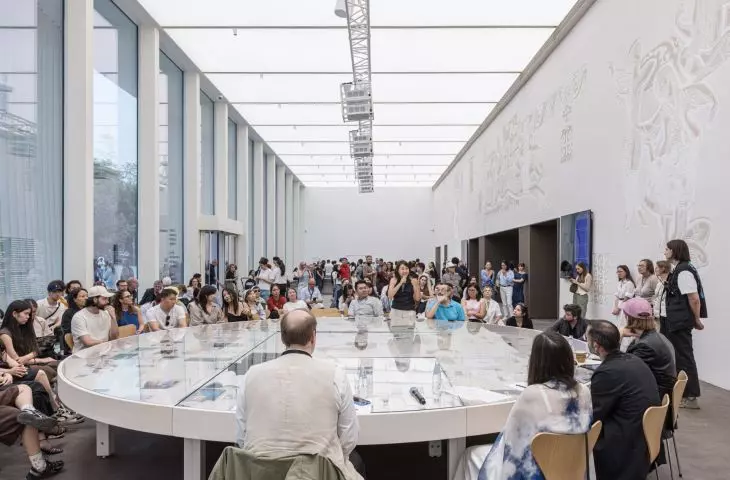
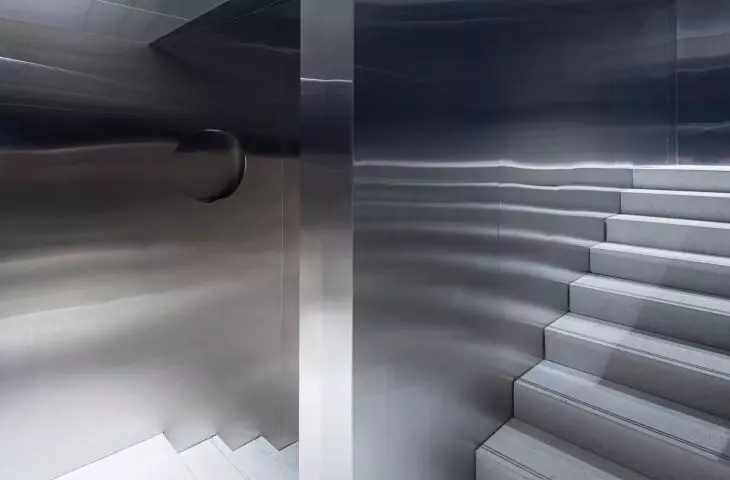
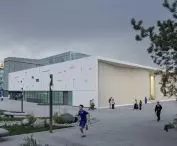
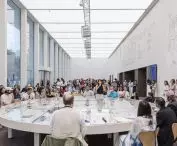
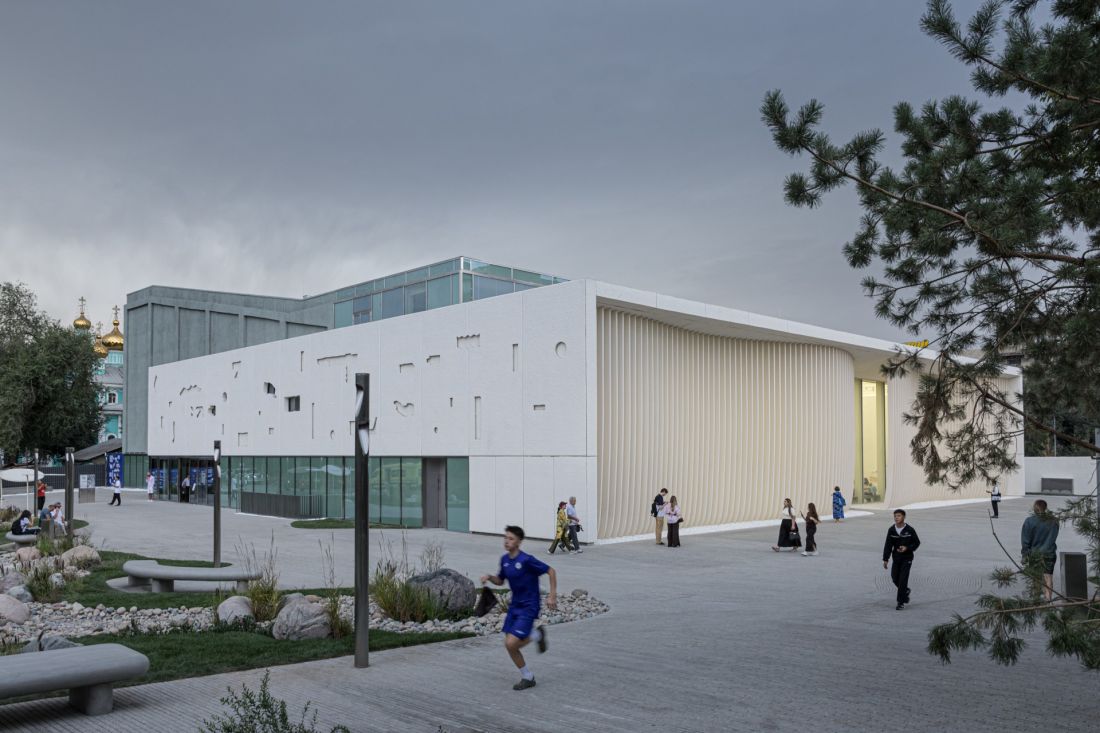
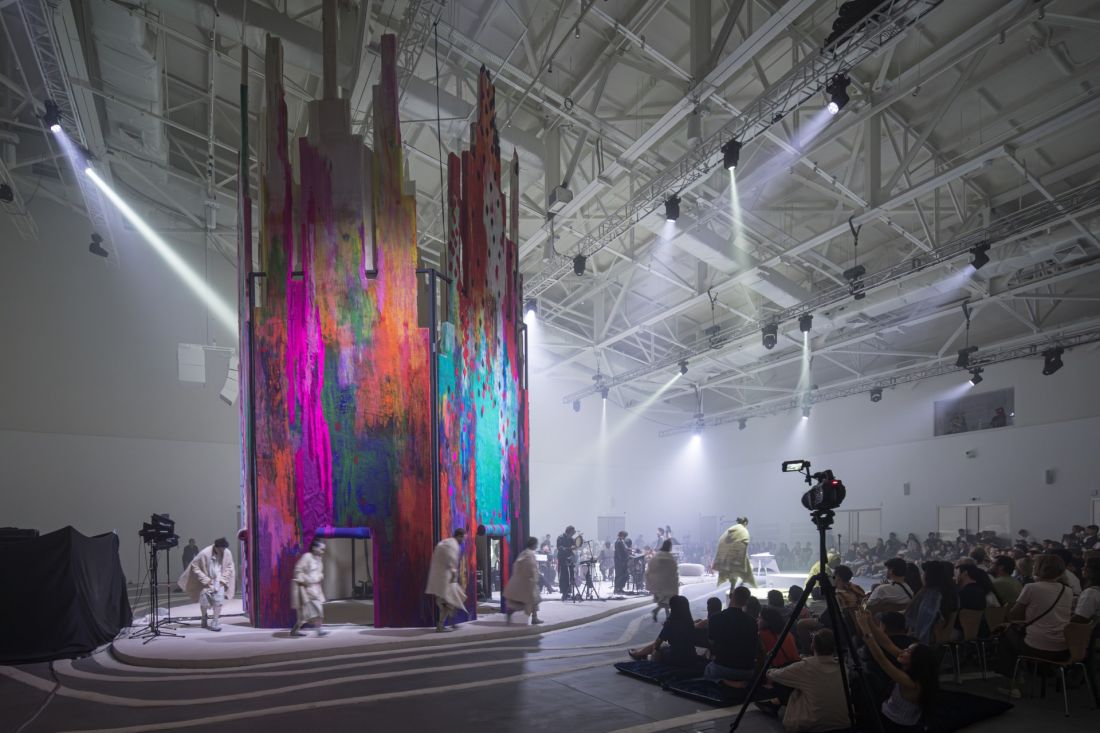
Due to seismic instability, part of the building had to be rebuilt almost from scratch. The foyer and side wings were reconstructed, introducing new functions: an educational studio, a café opening onto green space, offices, meeting rooms, workshops, and technical facilities. The most important decision, however, was to preserve the former movie theater. Its walls and roof structure were reinforced, and the interior was stripped of later additions. The former auditorium is no longer a space designed for a single viewing direction. It has become a large, flexibly programmable space, ready for exhibitions, performances, concerts, and experimental events.
Tselinny Center, Almaty — © Laurian Ghinitoiu, Asif Khan Studio
a cloud inscribed within a concrete volume
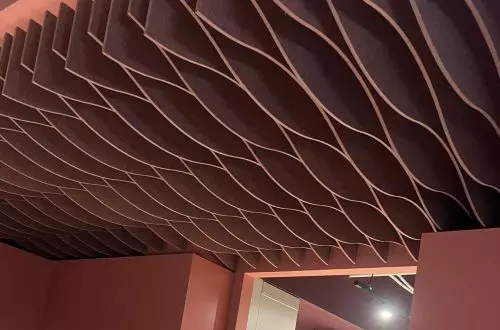
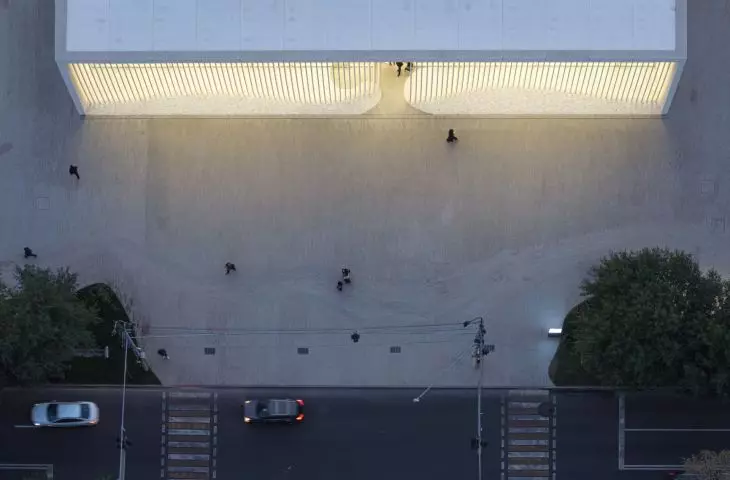
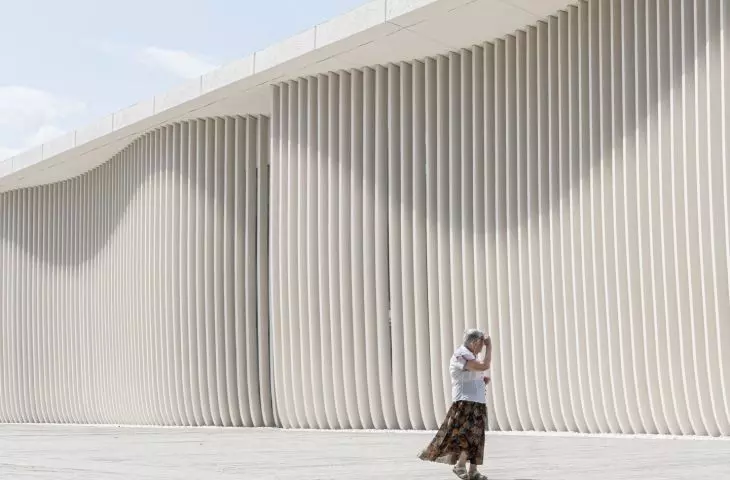
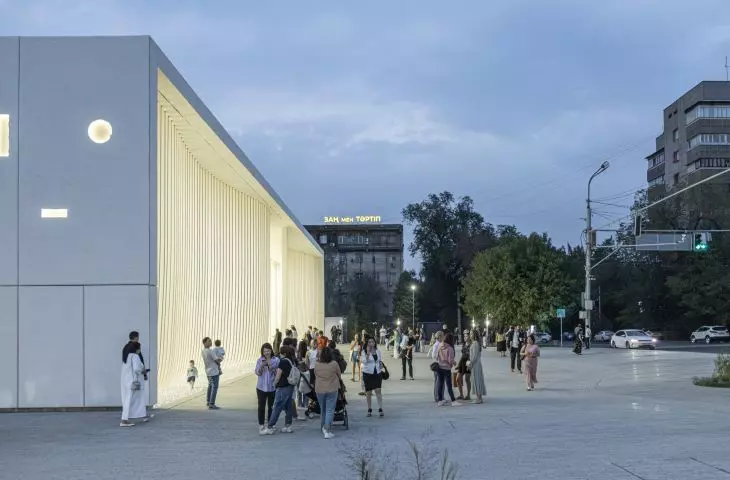
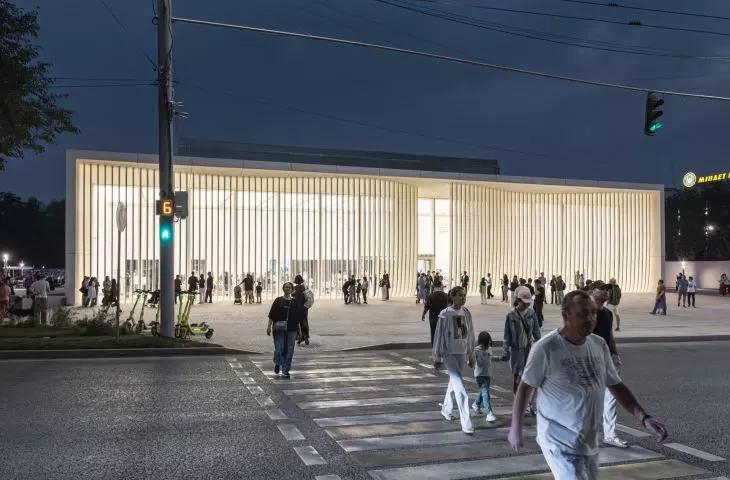
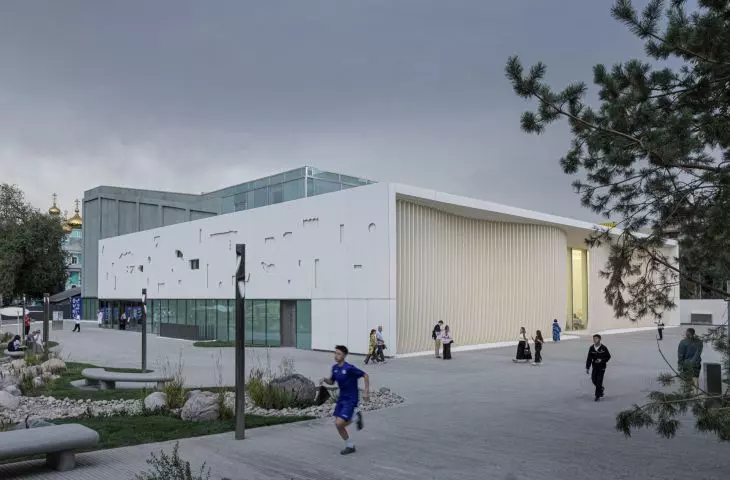
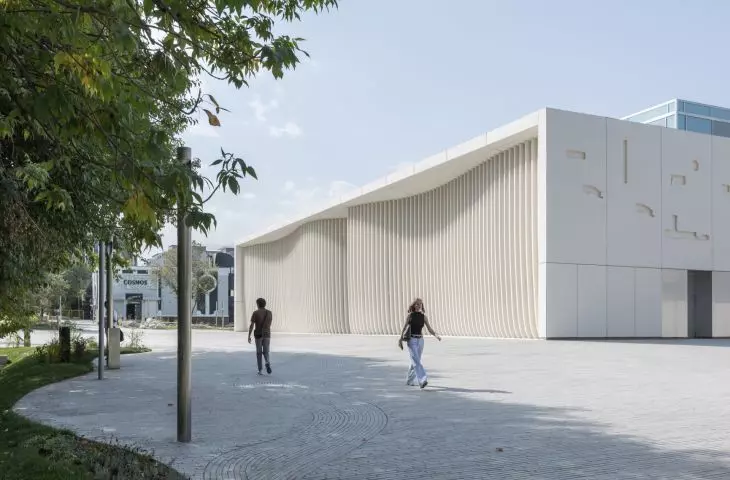
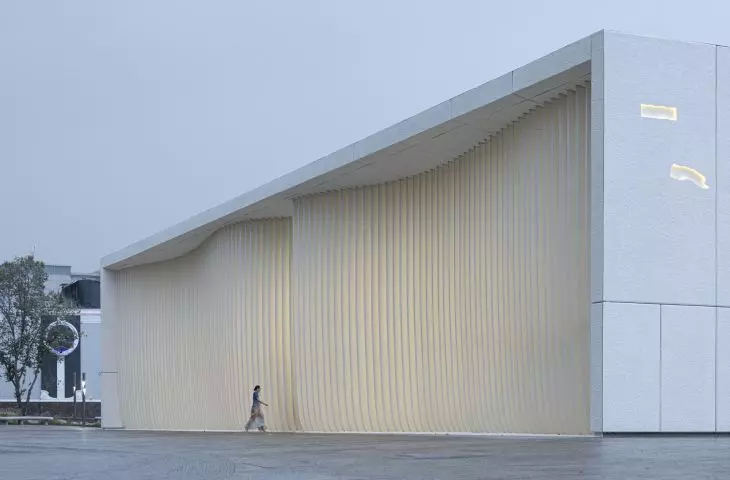
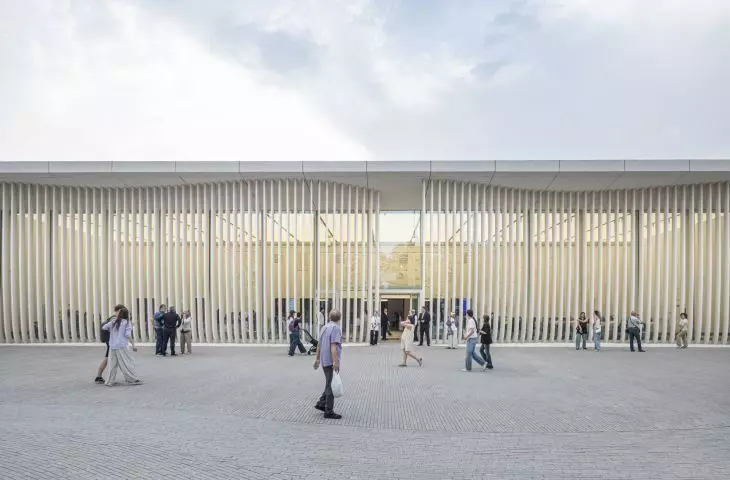
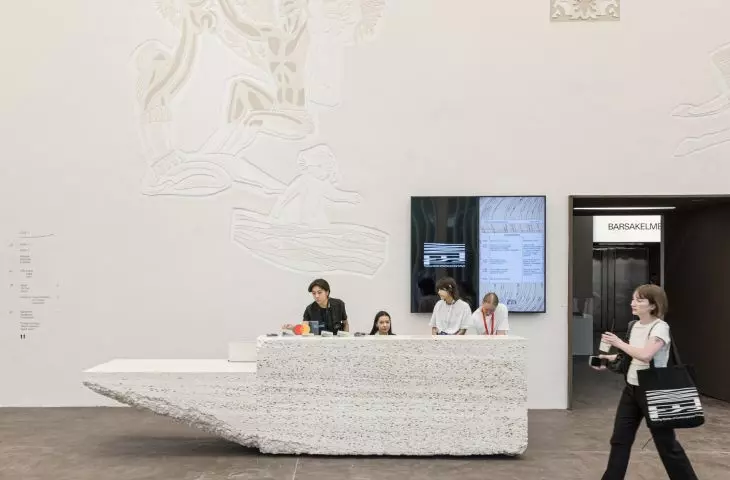
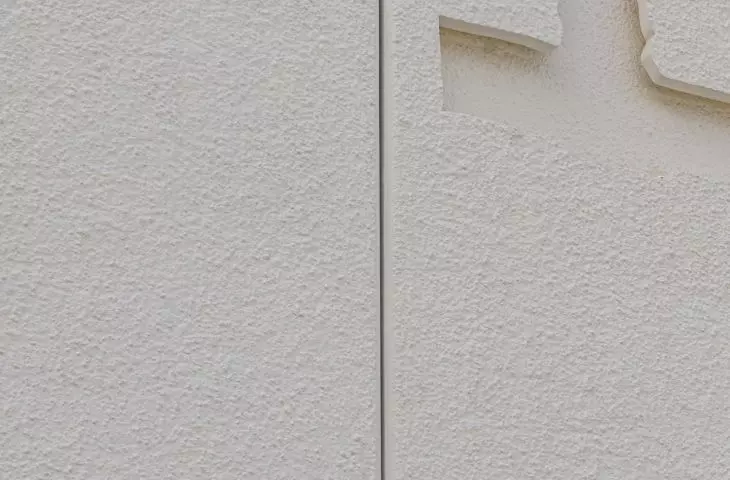
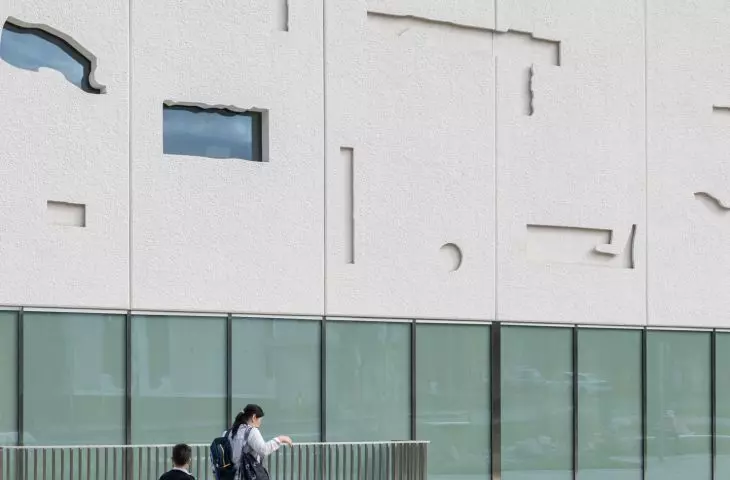
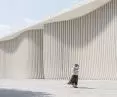
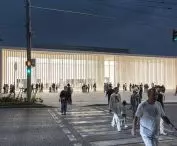
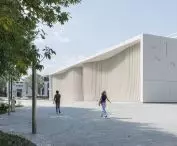
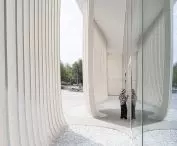
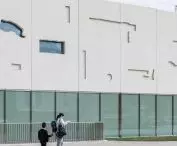
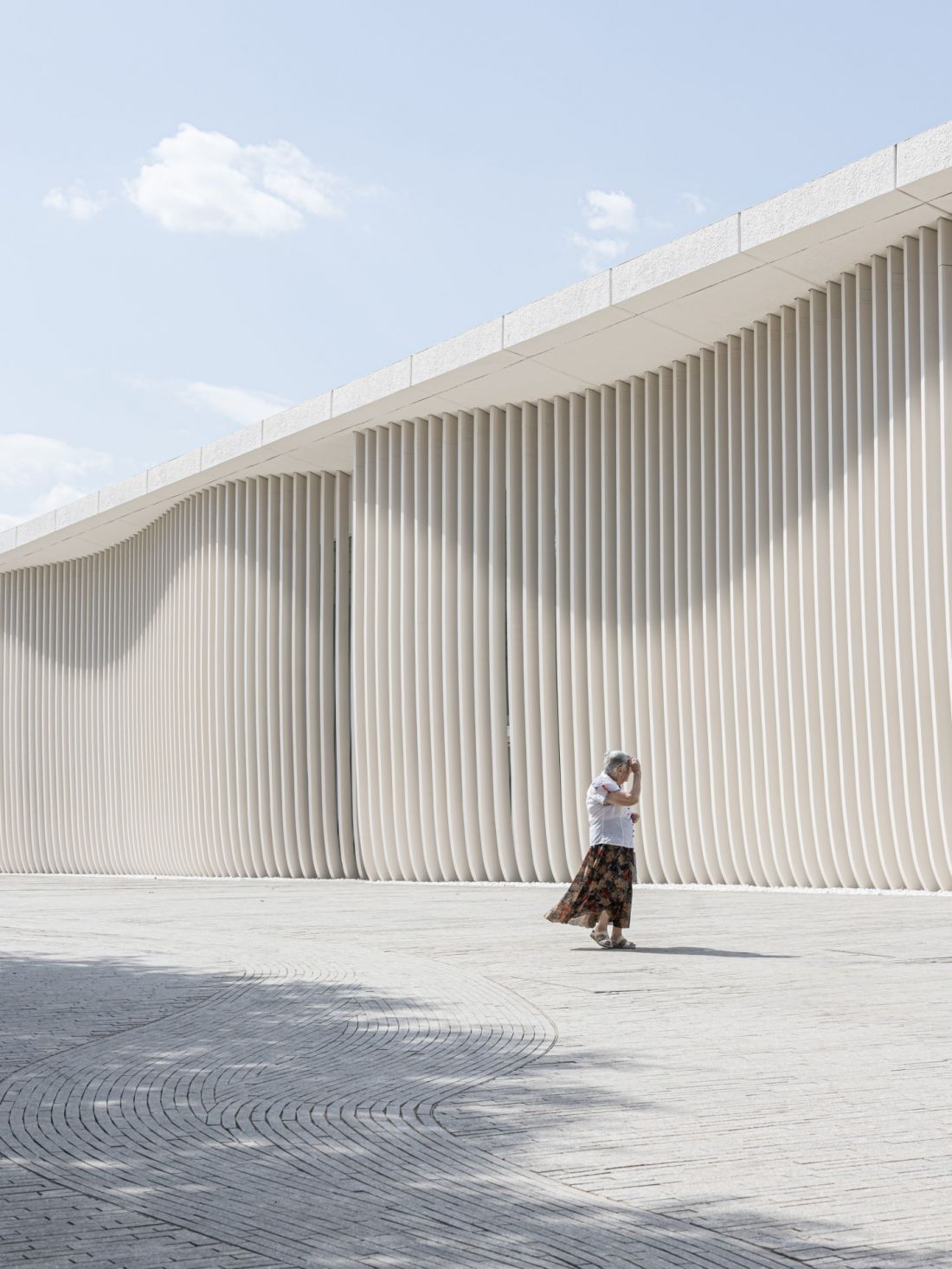
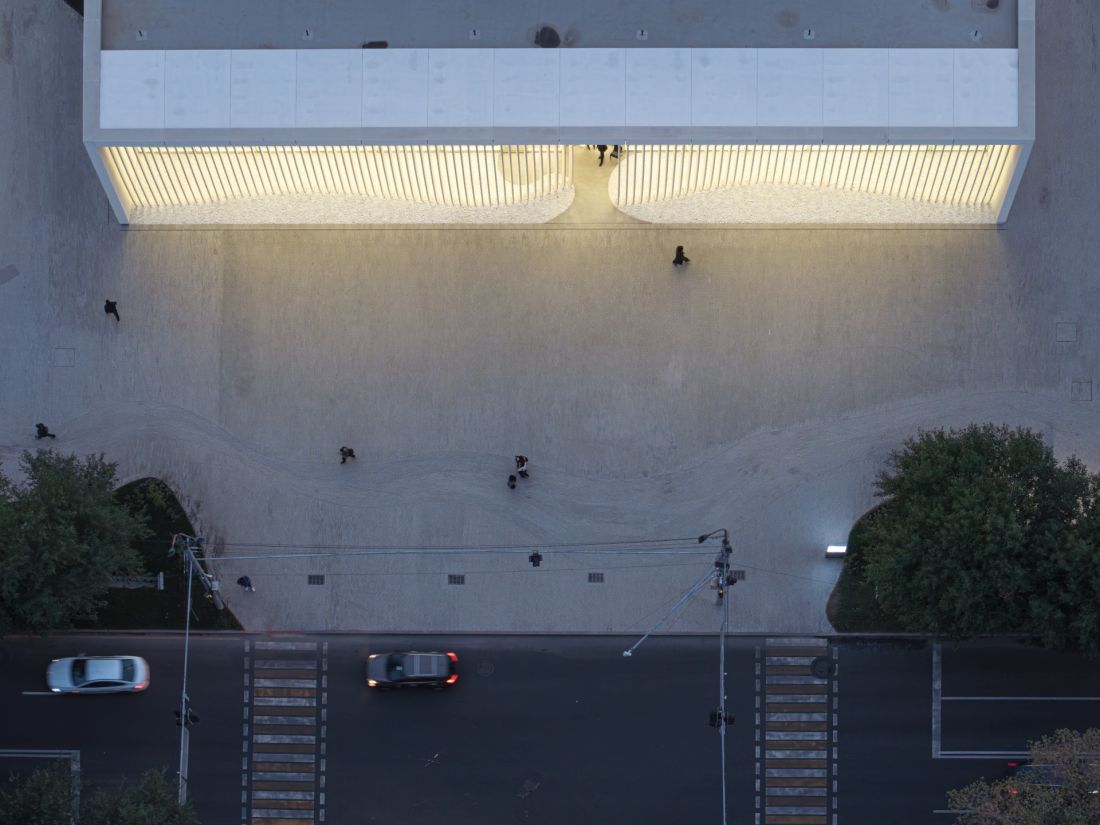
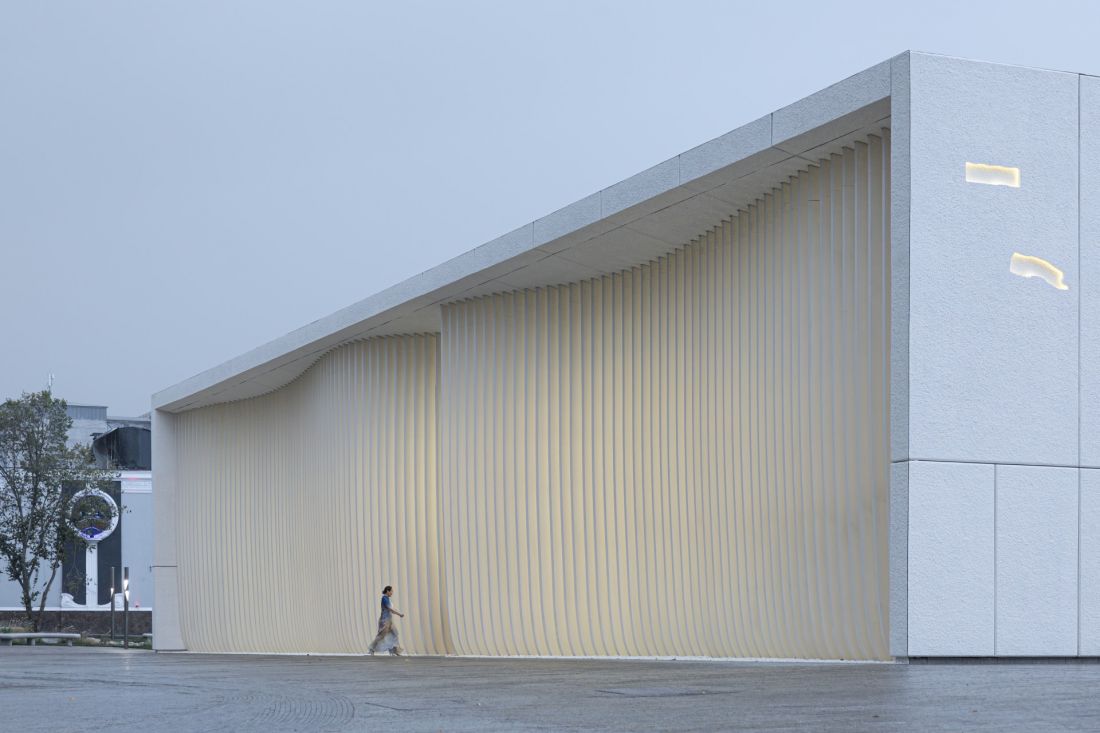
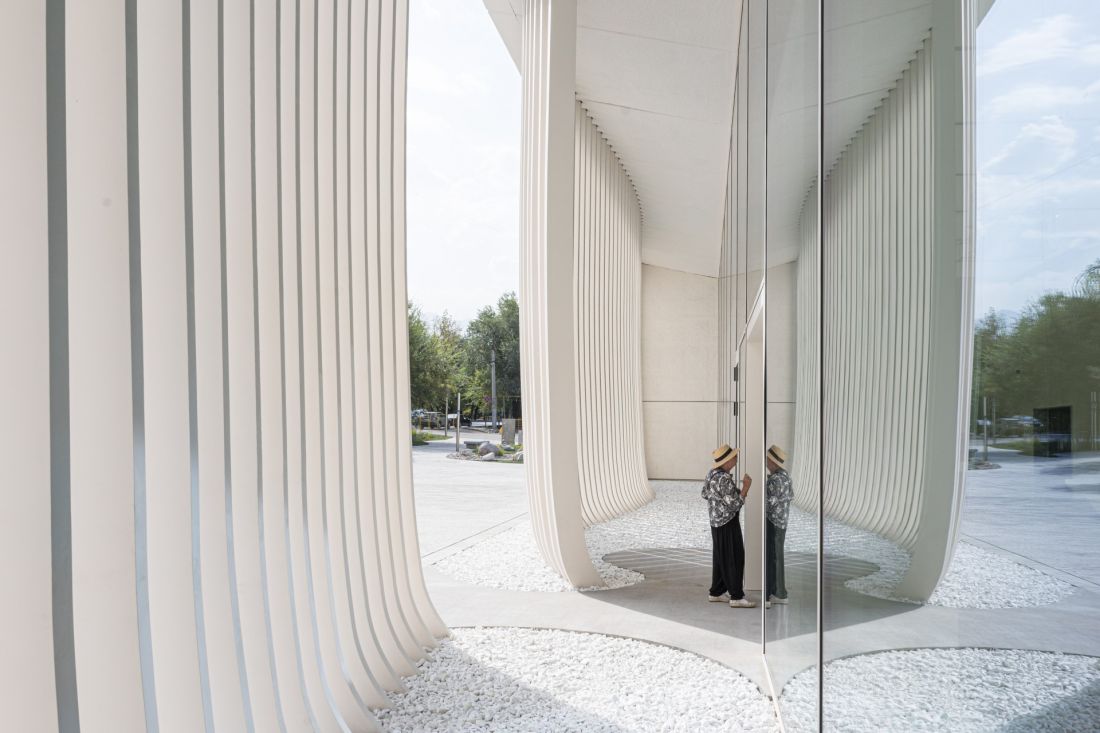
The project’s most recognizable feature is the soft, rounded entrance threshold, which Asif Khan describes as a cloud suspended within a concrete frame. This element softens the austerity of the modernist structure and transforms the way the building engages with the city. Instead of a single, hierarchical entrance , there is a more fluid boundary between the interior and its surroundings. The cloud motif also reappears on the north and south facades. It is formed by an abstract language of symbols developed from forms found in a replica of Evgeny Sidorkin’s mural. These are not literal ornaments, but visual traces of memory: familiar, though difficult to interpret unambiguously.
Tselinny Center, Almaty — © Laurian Ghinitoiu, Asif Khan Studio
ground floor open to the city
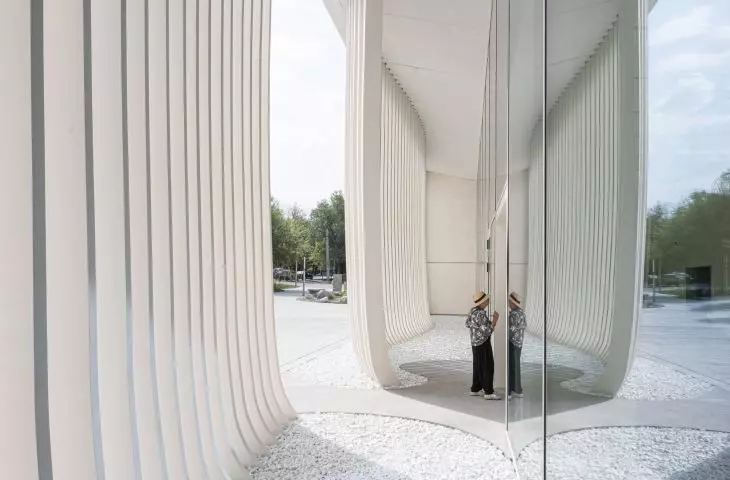
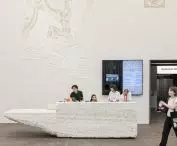
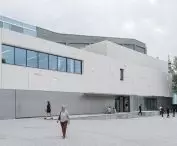
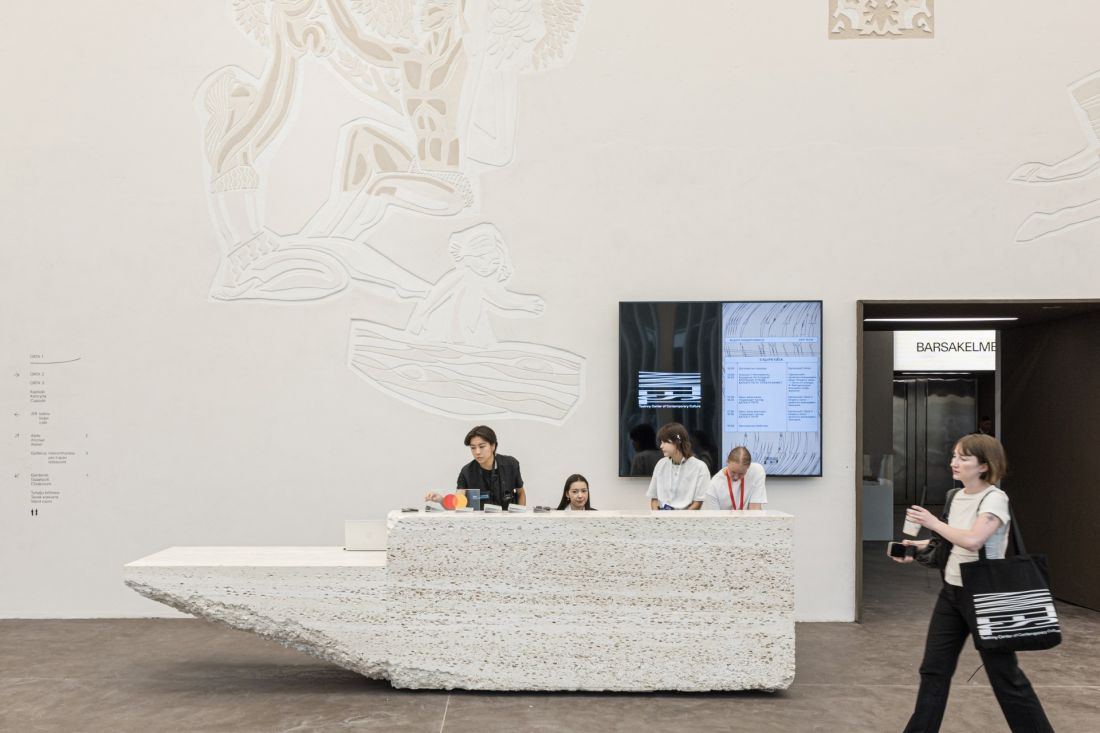
An important part of the renovation was lowering the ground floor and eliminating internal level differences. The stairs at the main entrance have also disappeared. In their place, a single, continuous plane has been created that connects the interior with the surrounding landscape. This gesture has both a practical and symbolic dimension. It facilitates access to the center while evoking the image of the steppe as common ground. The materials further develop this narrative: the landscape features rounded river stones excavated during construction and collected in the Almaty region; the reception area is made of limestone from the Mangystau region; and the foyer features pigmented concrete in earthy tones.
Tselinny Center, Almaty — © Laurian Ghinitoiu, Asif Khan Studio
light streaming into the interior of the former movie theater
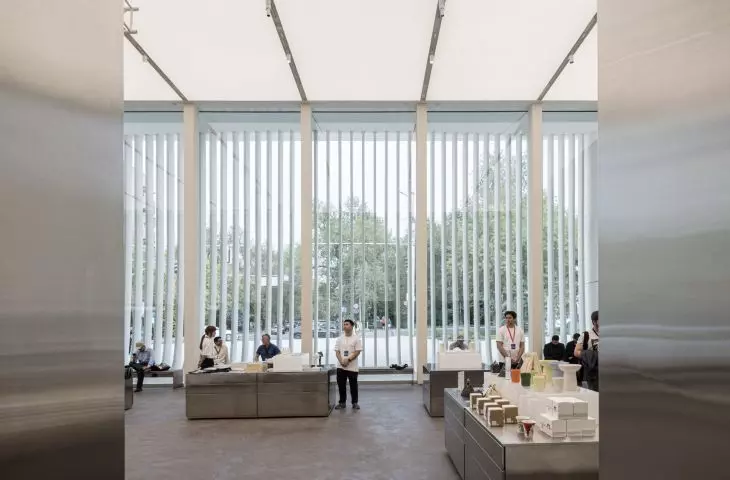
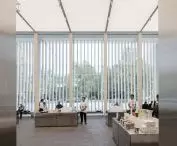
Steel-and-glass glazing has been installed on the ground floor, allowing natural light to reach the former movie theater auditorium for the first time. The shapes of the new openings echo the abstract motifs found on the facades, so the windows are not merely a technical addition but an integral part of the project’s design language. The building opens up on several sides—toward the park, the cathedral, the new squares, and the river landscape.
Tselinny Center, Almaty — © Laurian Ghinitoiu, Asif Khan Studio
Culture as a Form of Repair
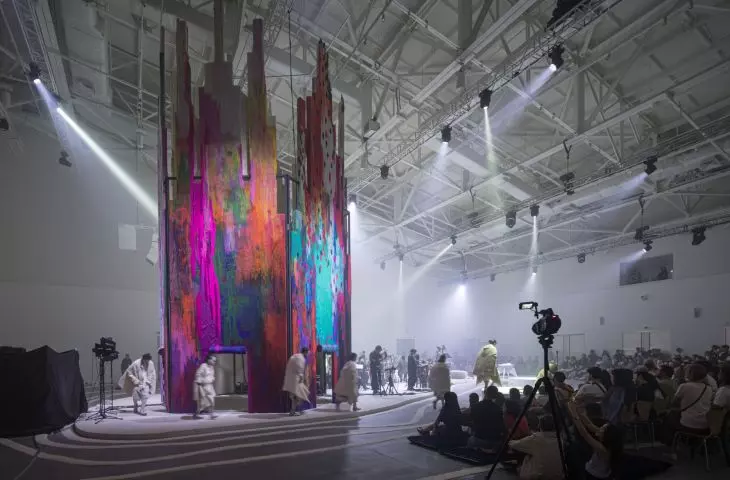
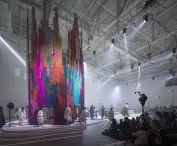
The center’s opening is accompanied by the BARSAKELMES program, based on a performance taking place in the former movie theater auditorium. Voices, costumes, sounds, and art installations create a dialogue not only with the renovated architecture but also with the memory of the place. The project does not attempt to turn the former cinema into a neutral backdrop. On the contrary—it brings out the tensions embedded in the building and reinterprets them in the language of contemporary culture. Retaining the name “Tselinny” is a deliberate gesture. A word once associated with the colonization of the steppe is appropriated and directed toward a different future: not as a symbol of conquest, but as a metaphor for fertile ground for art. In this sense, Asif Khan’s project is not merely an adaptation of a modernist cinema. It is an attempt to create a space where architecture, memory, and contemporary creativity can work together—without facile reconciliation, but with an awareness of what has been erased.